

Back pain that travels into the hip or leg can change the way you move through an entire day. Sitting in traffic, standing at work, sleeping comfortably, or walking through the neighborhood may become difficult when an irritated spinal nerve keeps sending pain signals. When medication, activity changes, or physical therapy have not provided enough relief, an epidural steroid injection may be one option to discuss.
At Pain & Wellness Institute, we provide image-guided pain procedures for patients in Tampa and Apollo Beach. An epidural injection is not right for every type of back pain, so our first priority is understanding your symptoms, medical history, examination findings, and available imaging before recommending treatment.
What Is an Epidural Steroid Injection?
An epidural steroid injection places anti-inflammatory medication into the epidural space around the spinal nerves. A local anesthetic may also be included. The goal is to reduce inflammation near an irritated nerve root so pain is less disruptive and movement becomes more manageable.
This procedure does not remove a herniated disc, reverse arthritis, or permanently cure the underlying condition. For an appropriate patient, however, temporary relief may create an opportunity to participate more comfortably in rehabilitation, resume daily activities, and continue a broader treatment plan.
When Might We Consider This Treatment?
Epidural steroid injections are most often considered for radiating nerve pain rather than ordinary muscle soreness. They may be discussed when symptoms are associated with:
- A herniated or bulging disc
- Spinal stenosis
- Degenerative disc changes
- Radiculopathy
- Sciatica that travels through the buttock or leg
- Persistent nerve irritation after spine surgery
The location and pattern of your symptoms matter. Pain that stays only in the lower back may have a different source than pain accompanied by tingling, numbness, burning, or an electric sensation down one leg. We use the consultation to determine whether the symptoms appear to follow a specific nerve pathway.
Your Appointment: Before, During, and After
1. Before the injection
We review your health history, current medications, allergies, prior treatments, and relevant imaging. Tell us if you take a blood thinner, have diabetes or glaucoma, are pregnant or may be pregnant, have an active infection, or have reacted to contrast material or medications in the past. Do not stop a prescribed medication unless the clinician managing it and our office give you specific instructions.
Your preparation checklist may include:
- Following individualized eating and drinking instructions
- Confirming which medications to take or hold
- Arranging transportation when sedation will be used
- Wearing comfortable clothing and arriving with enough time for check-in
- Bringing questions about the procedure and recovery
2. During the procedure
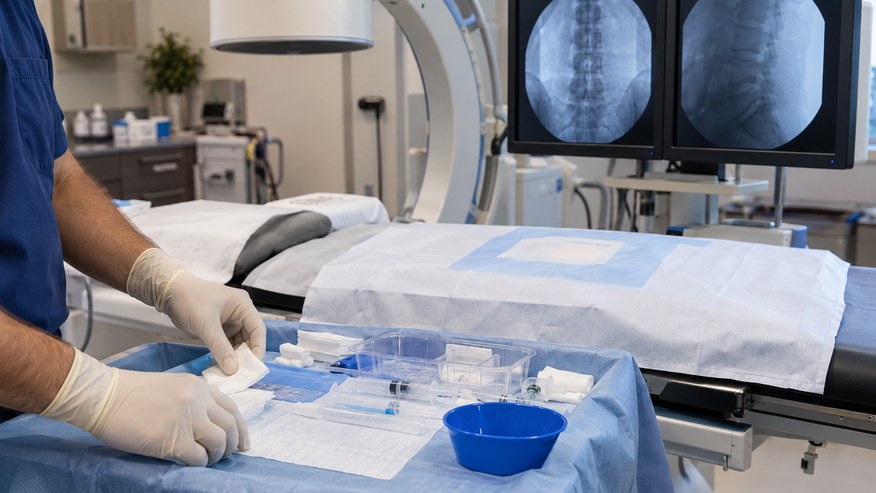
You are positioned so the physician can safely reach the treatment area. The skin is cleaned, and numbing medicine is used for comfort. Fluoroscopy, a form of real-time X-ray guidance, helps the physician direct the needle toward the intended epidural space. Contrast may be used to confirm placement before the medication is delivered.
You may notice pressure, tingling, or a brief increase in familiar symptoms. Tell the medical team immediately if you feel intense or unexpected pain. The procedure itself is generally brief, although check-in, preparation, and observation add time to the visit.
3. After the injection
You will be monitored before going home and will receive instructions based on the procedure and medications used. Temporary tenderness at the injection site can occur. Some patients notice a brief increase in pain before the steroid begins reducing inflammation, and improvement—when it occurs—may take several days.
Follow the activity and medication instructions we provide. Call or text our office promptly for concerns such as fever, increasing redness or drainage, severe worsening pain, a significant headache, or new weakness or numbness. Seek emergency care for severe or rapidly progressing symptoms.
Three Common Questions We Hear
Will the injection eliminate my pain?
No procedure can guarantee a particular result. Relief may be substantial, modest, temporary, or absent. We set realistic goals around both pain and function rather than promising a cure.
How long can relief last?
Duration varies with the diagnosis, the degree of inflammation, the patient’s overall health, and the treatment plan that follows. Some people experience relief for weeks or months. Others may not receive meaningful benefit.
Is it the same as an epidural used during childbirth?
No. Although both involve the epidural space, the medications, purpose, and technique differ. An epidural steroid injection is designed to address inflammation associated with certain spinal pain conditions.
Where the Injection Fits in a Larger Plan
Our goal is not simply to perform an injection. We want to understand why you hurt and how pain is affecting your function. Depending on your condition, care may also include therapeutic exercise, physical therapy, activity changes, medication management, or another targeted procedure. Our back pain treatment approach is individualized because two people with similar MRI findings can have very different symptoms.
Talk With Our Tampa Pain Management Team
If back or radiating leg pain continues to interfere with your work, sleep, or mobility, we can help you understand the next step. At Pain & Wellness Institute, we serve patients from Tampa, Apollo Beach, and communities throughout the Tampa Bay area with a careful, patient-specific approach to interventional pain care.
Call Pain & Wellness Institute today at (813) 873-7777 to schedule a consultation at our Tampa or Apollo Beach office.
This article provides general educational information and is not a substitute for an individual medical evaluation. Recommendations, risks, and recovery instructions vary by patient.