

When chronic nerve-related pain continues despite less-invasive treatment, the next decision can feel significant. Spinal cord stimulation is different from many procedures because patients usually have an opportunity to test the therapy before deciding whether to receive a permanent implant.
At Pain & Wellness Institute, we evaluate patients in Tampa and Apollo Beach to determine whether spinal cord stimulation may fit their diagnosis, treatment history, health, and personal goals. The trial is not a promise of permanent relief. It is a structured way to learn how stimulation affects your pain and daily function before a long-term decision is made.
The Short Version: What the Trial Is Designed to Answer
- Does stimulation meaningfully reduce your usual pain?
- Can you walk, sleep, work, or complete daily activities more comfortably?
- Are the sensations and controller easy enough for you to manage?
- Would the level of improvement justify considering a permanent system?
The answers are personal. A change that matters to one patient may not meet another patient’s goals, which is why we discuss specific functional targets before the trial begins.
How Spinal Cord Stimulation Works
Spinal cord stimulation uses mild electrical impulses to change how pain signals are processed by the nervous system. Thin leads are positioned in the epidural space near the spinal cord and connected to a pulse generator. The system does not repair the original injury or remove every source of pain; it is intended to make certain chronic pain signals less prominent.
Some systems create a gentle tingling sensation in the painful area, while other programming modes may work without a noticeable sensation. The appropriate system and settings depend on the patient and the pattern of pain.
Who May Be Considered for a Trial?
A trial may be discussed for selected patients with difficult-to-manage chronic pain who have not received enough relief from medication, physical therapy, injections, surgery, or other conservative care. Conditions may include persistent pain after spine surgery, complex regional pain syndrome, and certain forms of severe nerve-related pain or neuropathy.
A candidate generally needs:
- A diagnosis and pain pattern that may respond to neuromodulation
- Realistic expectations about pain reduction and function
- No uncontrolled infection or other condition that makes the procedure unsafe
- The ability to care for the temporary equipment and follow activity restrictions
- A willingness to track results honestly during the trial
Evaluation may include medical-record review, imaging, medication history, and psychological screening. Screening is not a judgment about whether pain is real. It helps identify factors that can influence coping, device use, expectations, and long-term results.
Trial and Permanent Implant: Two Separate Stages
The temporary trial
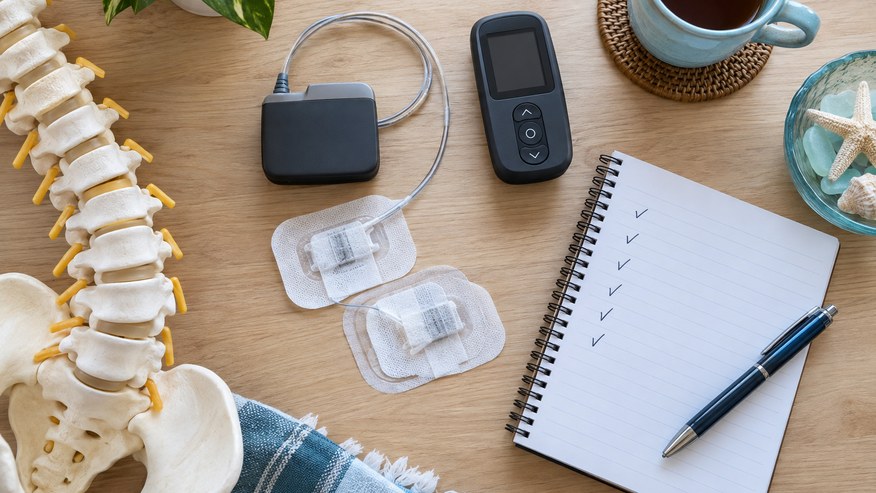
Using image guidance, the physician places temporary leads in the epidural space and connects them to an external generator. The equipment remains outside the body during the testing period. You go home with instructions for protecting the leads, keeping the equipment dry, using the controller, and recording changes in pain and activity.
The decision point
Over several days, you evaluate the therapy during ordinary life. We look beyond a single pain score. Better sleep, improved walking tolerance, fewer interruptions during work, or greater participation in family activities may be important signs of benefit. If the trial does not provide meaningful improvement, the temporary leads are removed and other options can be discussed.
The permanent system
A successful trial does not automatically require implantation. If the results are meaningful and you choose to continue, a separate procedure is scheduled to place permanent leads and a generator under the skin. The decision includes a detailed discussion of benefits, risks, recovery, device maintenance, and long-term follow-up.
How to Make the Trial More Useful
We encourage patients to compare the trial with their typical baseline instead of trying to “push through” every activity. A simple daily record can make the follow-up conversation more specific.
- Choose two or three activities that pain usually limits.
- Record pain before and after those activities.
- Note sleep quality, medication use, and how long you can stay active.
- Write down any unpleasant or unexpected stimulation.
- Keep the equipment dry and follow all bending, lifting, and twisting restrictions.
- Call the office if a dressing loosens, the device stops working, or symptoms change suddenly.
Benefits, Limits, and Risks
For a carefully selected patient, spinal cord stimulation may reduce pain and improve function, sleep, and quality of life. It is generally used as one part of a comprehensive pain management plan rather than as a stand-alone cure.
Results vary, and stimulation may become less effective over time. Potential complications include infection, bleeding, spinal-fluid leak, nerve injury, lead movement, equipment malfunction, or discomfort at the generator site. Permanent systems also require attention to charging or battery replacement, activity precautions during healing, future imaging compatibility, and routine programming visits.
Questions to Bring to Your Consultation
- What diagnosis is the stimulation intended to treat?
- What specific improvements would count as a successful trial for me?
- What activities must I avoid while the temporary leads are in place?
- How will we evaluate my pain, sleep, activity, and medication use?
- Which risks are most relevant to my health history?
- How could a permanent device affect MRI scans, travel, work, or exercise?
Find Out Whether a Trial Is Appropriate
If chronic pain continues to limit your life after other treatment, a spinal cord stimulation trial may help clarify whether neuromodulation is worth considering. Our team will review what you have already tried, explain the trial in practical terms, and help you set realistic goals.
Call Pain & Wellness Institute today at (813) 873-7777 to schedule a consultation at our Tampa or Apollo Beach office.
This article provides general educational information and is not a substitute for individual medical advice. Candidacy, preparation, risks, and recovery instructions vary by patient and device.